Buying an Old Stone House in Greece: Renovation, Permits and Due Diligence
A foreign buyer’s guide to old stone houses in Greece: title checks, engineer inspections, permits, access, utilities and realistic renovation budgeting.
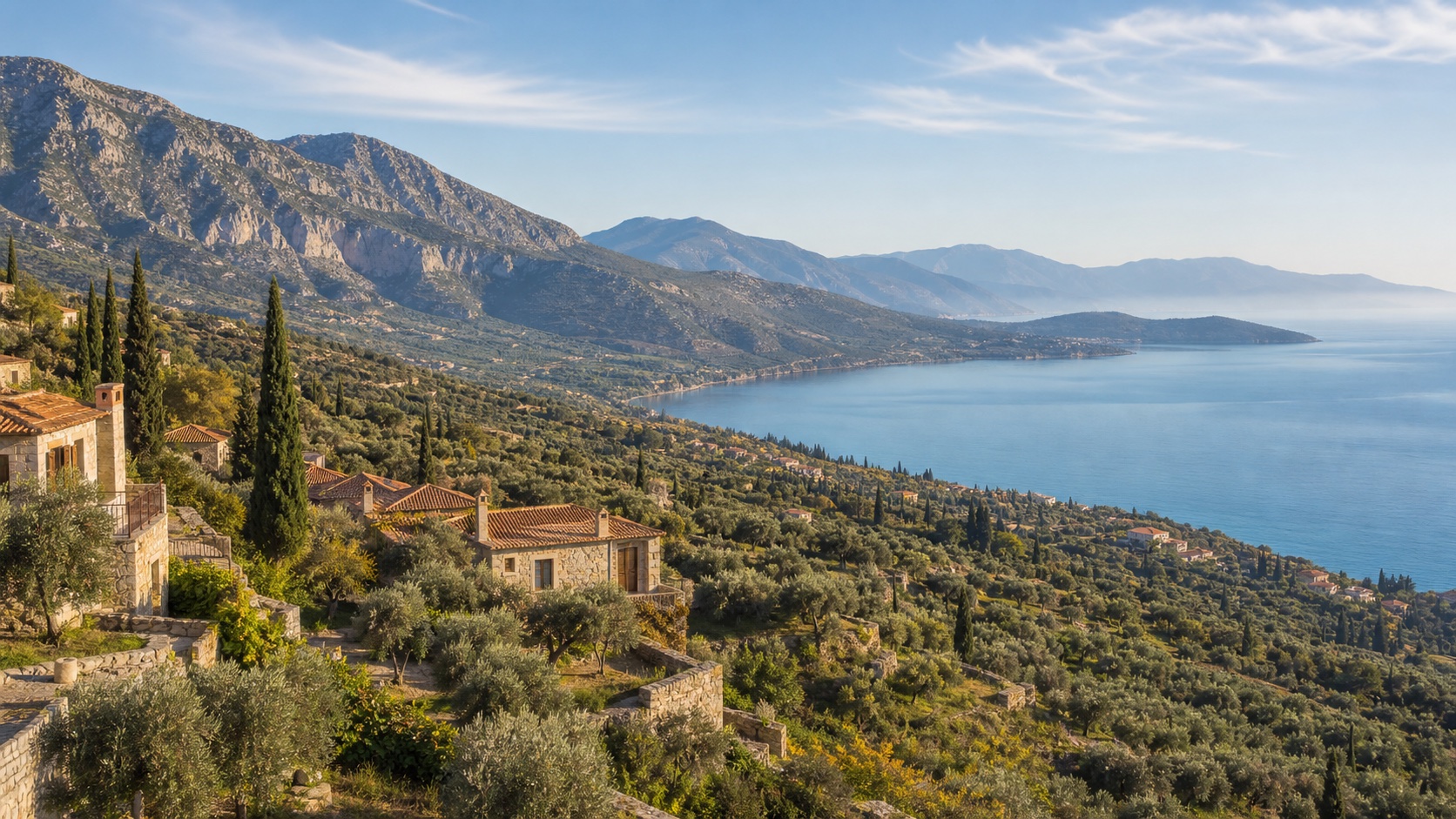
Buying an old stone house in Greece can be one of the most rewarding ways to own a home in the country. It can also be one of the easiest ways to underestimate legal and renovation complexity. A village house, island cottage or Mani tower may look simple, but the purchase file can involve old titles, inherited ownership, historic alterations, boundary questions and building work completed long before modern records were digitised.
This guide is for foreign buyers who want the character of an older Greek home without treating renovation as a gamble. It was reviewed on 29 September 2026 and is general information, not legal, engineering or tax advice.
Before you buy
Start with the legal property, not the photograph
The first question is not whether the stone walls are beautiful. It is what you are legally buying. Ask your independent lawyer to confirm the seller's ownership, the chain of title, co-owners, mortgages or other encumbrances, cadastral registration and any rights of way. Older homes are more likely to have passed through families, and a sale can be delayed when inheritance or registration records are incomplete.
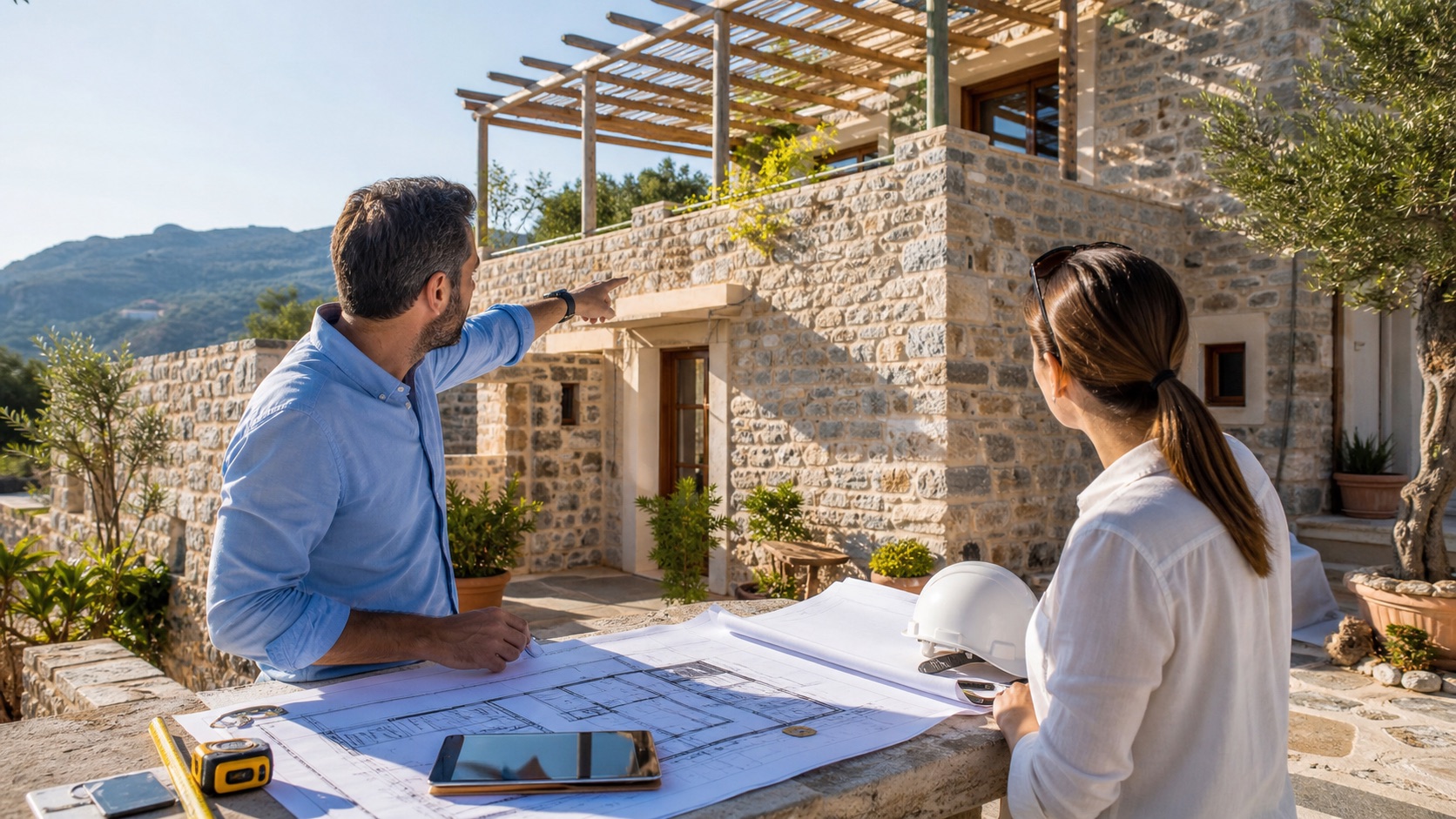
Your engineer has a different job. The engineer should compare the building that exists on site with the approved plans, permits and recorded floor area. A room, terrace, store, pergola, pool or enclosed balcony that appears harmless can matter if it is not reflected correctly in the legal building file.
Greece's Electronic Building Identity system is administered through the Technical Chamber of Greece. Gov.gr states that an authorised engineer can issue a completeness certificate once the building identity entry is final, an inspection has taken place and the required fee has been paid. That is one reason an independent engineer should be involved before completion rather than after you become the owner.
Read the Greek property due-diligence checklist before you make a binding offer.
Understand what "needs renovation" really means
Cosmetic renovation is very different from structural repair. Repainting, kitchen replacement and new furniture are easy to see and budget. Damp, roof movement, failing drainage, unsafe electrical work and retaining-wall problems are not.
Before making a binding commitment, ask for a written technical inspection. For a stone property, pay particular attention to roof condition, moisture pathways, cracks, foundations, drainage around the building, retaining walls, timber condition and whether previous repairs used materials compatible with the original structure.
Do not assume that thick stone walls automatically mean a house is structurally sound. Equally, do not assume every crack means a major defect. The value of the inspection is that a qualified professional can distinguish ordinary age from a problem that changes the economics of the purchase.
Check what work needs permission
Greek construction and renovation work can require approvals. The official e-Adeies system is used by engineers to issue and manage building permits, approvals and revisions. The National Registry of Administrative Public Services notes that building permits are required for categories including construction, additions, certain repairs, demolition, pools and some changes of use.
That does not mean every paint job needs a full building permit. It means the buyer should not decide the approval route from appearance alone. Ask the engineer to divide the proposed works into work that needs no special approval, work that may use a small-scale approval, and work that requires a building permit or another authority.
Historic settlements, listed buildings and archaeologically sensitive locations can add another layer. A property can be perfectly attractive and still be unsuitable for the alterations you imagine.
Budget in phases, not one headline number
A renovation estimate should separate essential work from discretionary work. Phase one is safety and weatherproofing: structure, roof, water ingress, drainage, electrical safety and plumbing. Phase two is building performance: windows, insulation where appropriate, heating, cooling and hot water. Phase three is kitchens, bathrooms and finishes. Phase four is landscaping, furniture and styling.
Ask contractors for written scopes rather than a single verbal price. Clarify whether VAT, demolition, waste removal, scaffolding, transport to an island, professional fees, permits and utility upgrades are included.
Foreign buyers should also hold a contingency. The right percentage depends on the building and how much investigation has been completed, but an old house with concealed fabric deserves more contingency than a recently completed apartment.
Island and village renovation has its own logistics
On an island, materials and specialist trades may have to travel by ferry. Summer demand can make contractors harder to schedule. Narrow village streets may restrict delivery vehicles or cranes. Work that is straightforward in Athens can become slower when every delivery has to fit ferry timetables and local access.
Before buying, ask how a contractor would physically get materials to the property. Check parking, road width, steps, shared passages and storage space. These practical questions are not glamorous, but they can have a large effect on cost.
Utilities deserve an inspection too
Ask about the electricity supply, meter status, water source, drainage or sewer connection, internet availability and heating system. In rural areas, a property may rely on a septic system, water tank or other arrangements that differ from a city apartment.
Do not treat an old electrical panel or ageing boiler as a minor afterthought. Ask what capacity is available if you plan induction cooking, air conditioning, a heat pump, pool equipment or electric-vehicle charging.
Energy performance and year-round comfort
A house that feels wonderful in August may be uncomfortable in January. Ask about orientation, shading, ventilation, damp, window quality and heating. Thick masonry can moderate temperatures, but comfort depends on the whole building.
If you plan to live in Greece year-round, investigate the property with winter in mind. Mountain and northern locations can be cold. Coastal houses can face wind, salt and humidity. A successful renovation responds to the microclimate rather than applying the same specification everywhere.
Protect the architecture without buying a museum
The best old-house renovations normally preserve what gives the building identity while improving the parts that affect safety and daily life. Stonework, timber ceilings, old floors, arches and courtyards may be worth keeping. Wiring, plumbing, waterproofing and climate control usually need a more practical approach.
Ask the engineer or architect which features are protected, which are structurally important and which can be altered. This prevents a design concept from being developed around work that cannot be approved.

For more detail, see our guide to illegal building work and permits and Greek property title checks.
A foreign buyer's pre-offer checklist
Before paying a non-refundable deposit, aim to have answers to these questions:
- Who owns the property and can every required owner sign?
- Does the cadastral or registry record match the property being sold?
- Does the actual building match its legal plans and recorded area?
- Are there unauthorised works, and what is their documented status?
- Is the Electronic Building Identity file complete or capable of being completed?
- What structural, roof, moisture and services work is required?
- Which planned renovations need permits or other approvals?
- Are there heritage, archaeological or settlement restrictions?
- Can contractors and materials physically access the property?
- What is the realistic all-in budget including professional fees and contingency?
The decision rule
An old Greek house should be purchased on two numbers: the acquisition price and the credible finished cost. A cheap ruin is not cheap if the legal file is difficult, access is poor and the structural work is extensive. A more expensive house with a clean file and sound shell may be the better purchase.
The goal is not to remove the romance from buying an old home. It is to protect it. When title, legality, structure, permissions and budget have been checked independently, you can focus on the part that attracted you in the first place: creating a home with a genuine sense of Greece.
Sources reviewed
Official references reviewed for this guide include Gov.gr's Electronic Building Identity services, Gov.gr and the National Registry's e-Adeies building-permit information, the Technical Chamber of Greece, AADE property-tax guidance and the Hellenic Cadastre. Rules depend on the property and proposed works, so obtain property-specific advice before committing funds.