Illegal Building Work in Greece: How Foreign Buyers Can Avoid Permit Problems
The risk
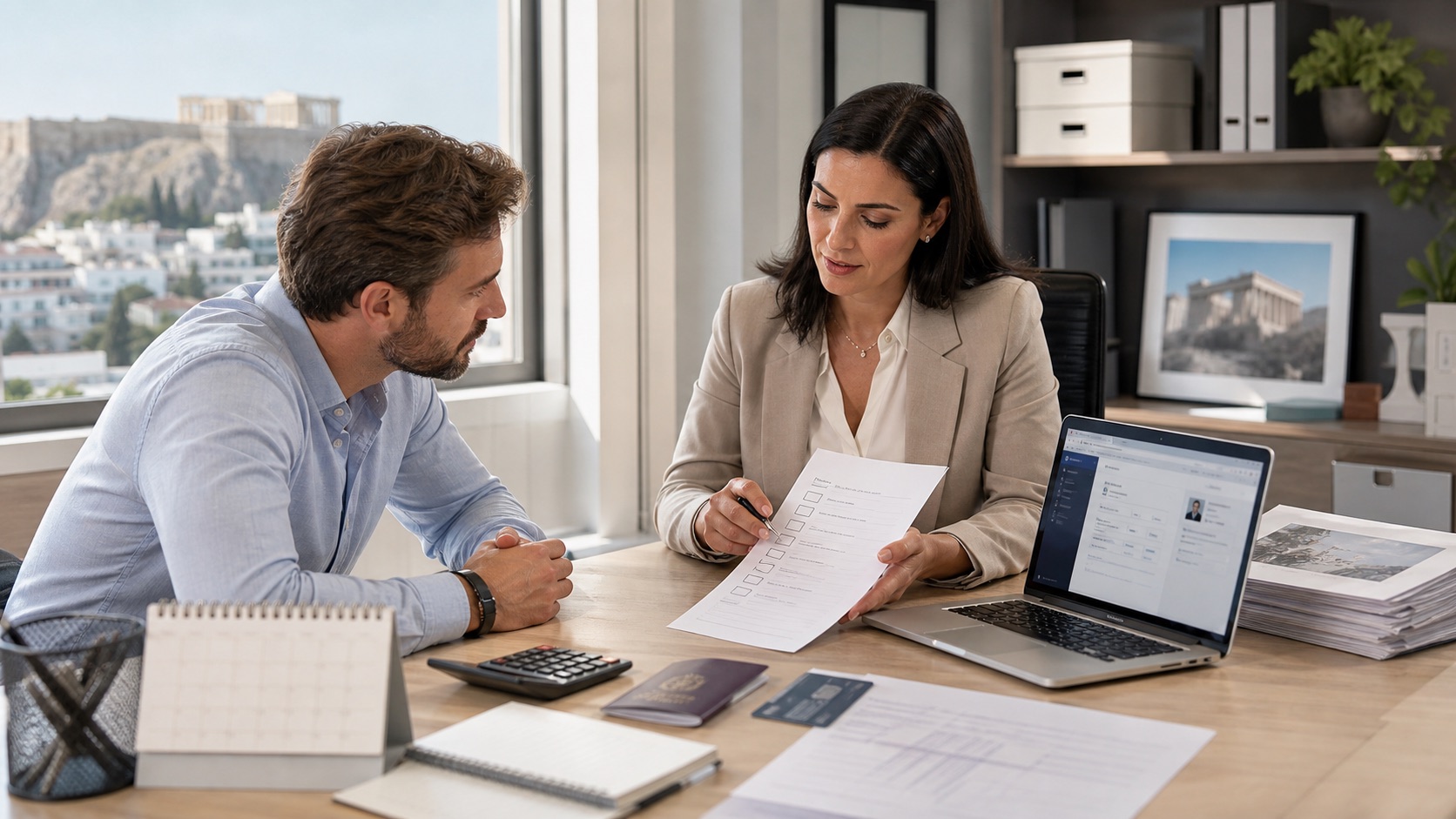
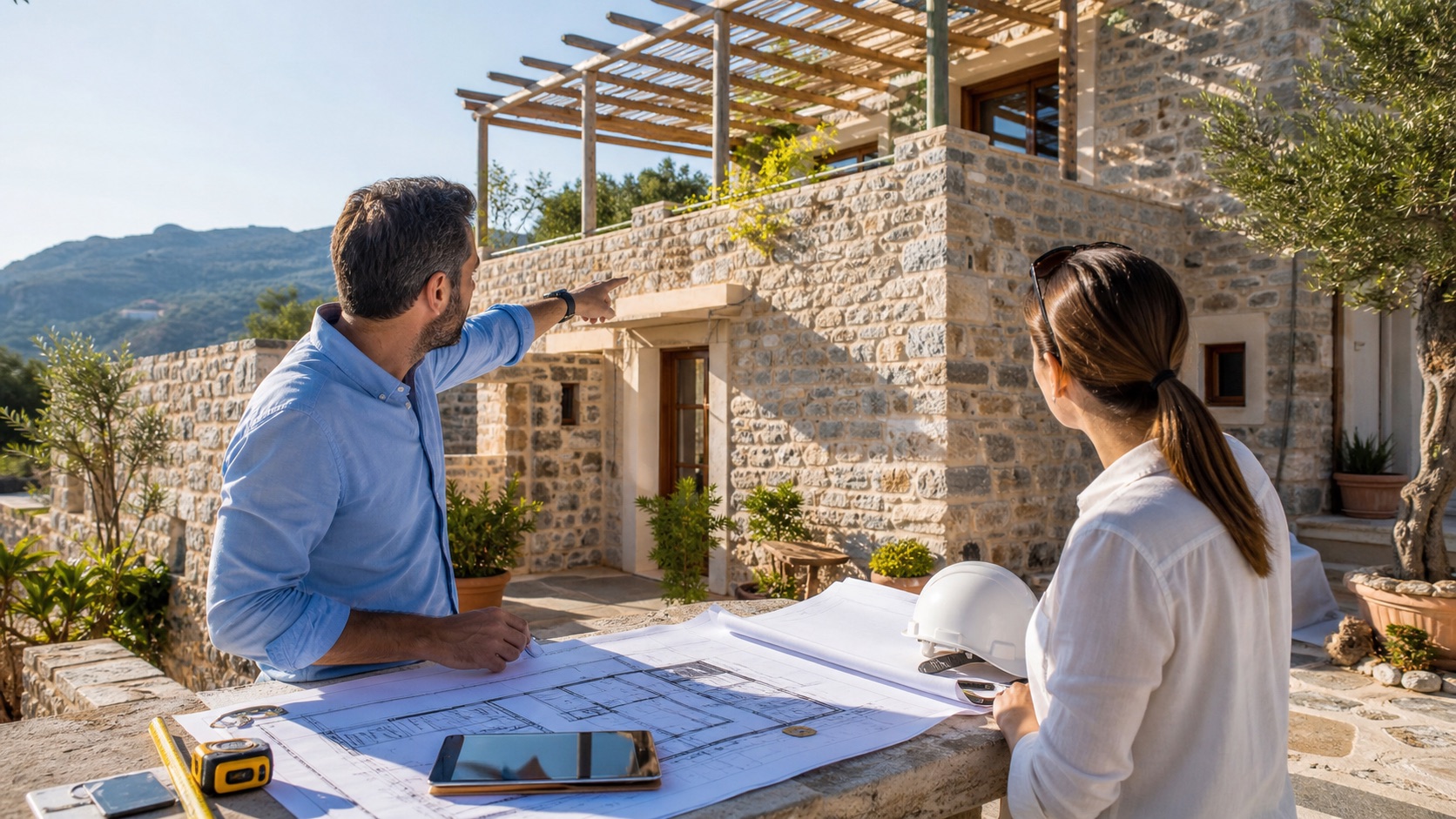
Foreign buyers often focus on title. They also need to check the building. In Greece, older homes may have terraces, rooms, basements, pools, pergolas, or extensions that do not match the permit file.
Some issues can be regularised. Some cannot. Some are cheap. Some change the whole value of the property.
What the engineer should check
- Building permit and approved plans.
- Actual floor area compared with the legal plans.
- Semi-outdoor spaces, terraces, basements, and storage areas.
- Pool, pergola, boundary wall, and parking permits.
- Energy certificate.
- Electronic building identity, where required.
- Any regularisation certificates for past illegal works.
- Whether future renovation is allowed.
Why square metres can mislead
Listings often show a single size. That number may include legal indoor space, regularised space, storage, terraces, or informal additions. Ask your engineer to split the area into legal categories.
This matters for price, tax, insurance, rental use, future sale, and bank valuation.
Red flags
Be careful if a room is described as storage but used as a bedroom, if a basement has been turned into living space, or if a roof terrace has been enclosed. Also check pools, pergolas, boundary walls, and parking spaces.
These issues are common in many markets, not only Greece. The answer is not panic. The answer is a written engineer report before you sign.
Practical buyer tip
Add an engineer condition to your offer. The condition should say that the deal depends on a satisfactory technical review. If the seller refuses, treat that as a warning sign.
Do not buy first and "sort it out later" unless your lawyer and engineer have confirmed the cost, route, and risk in writing.
Useful next read: Greek Property Due Diligence Checklist for Overseas Buyers.
Use official tax and registry portals such as AADE and the Hellenic Cadastre alongside local professional advice.